ಮನೆಗೆ ಯಾವ ಸೋಲಾರ್ ವಾಟರ್ ಹೀಟರ್ ಬೇಕು?
Solar water heater buying guide: size, type and price
Davangere has plenty of sun for a solar water heater. Whether it pays off depends on how much hot water your family uses, and on whether your roof, plumbing and water suit the system.
Size it to the family
Solar heaters are rated in LPD, litres of hot water per day under test conditions. For morning bucket baths, plan on roughly 40–50 litres per person. Showers, two bathrooms in use together or a very cold morning call for more.
- 2–3 people: 100 LPD
- 3–4 people: 150 LPD
- 4–5 people: 200 LPD
- 6–8 people or two bathrooms: 300 LPD
- Hostels, hospitals and large joint families: 500 LPD and above
ETC or FPC?
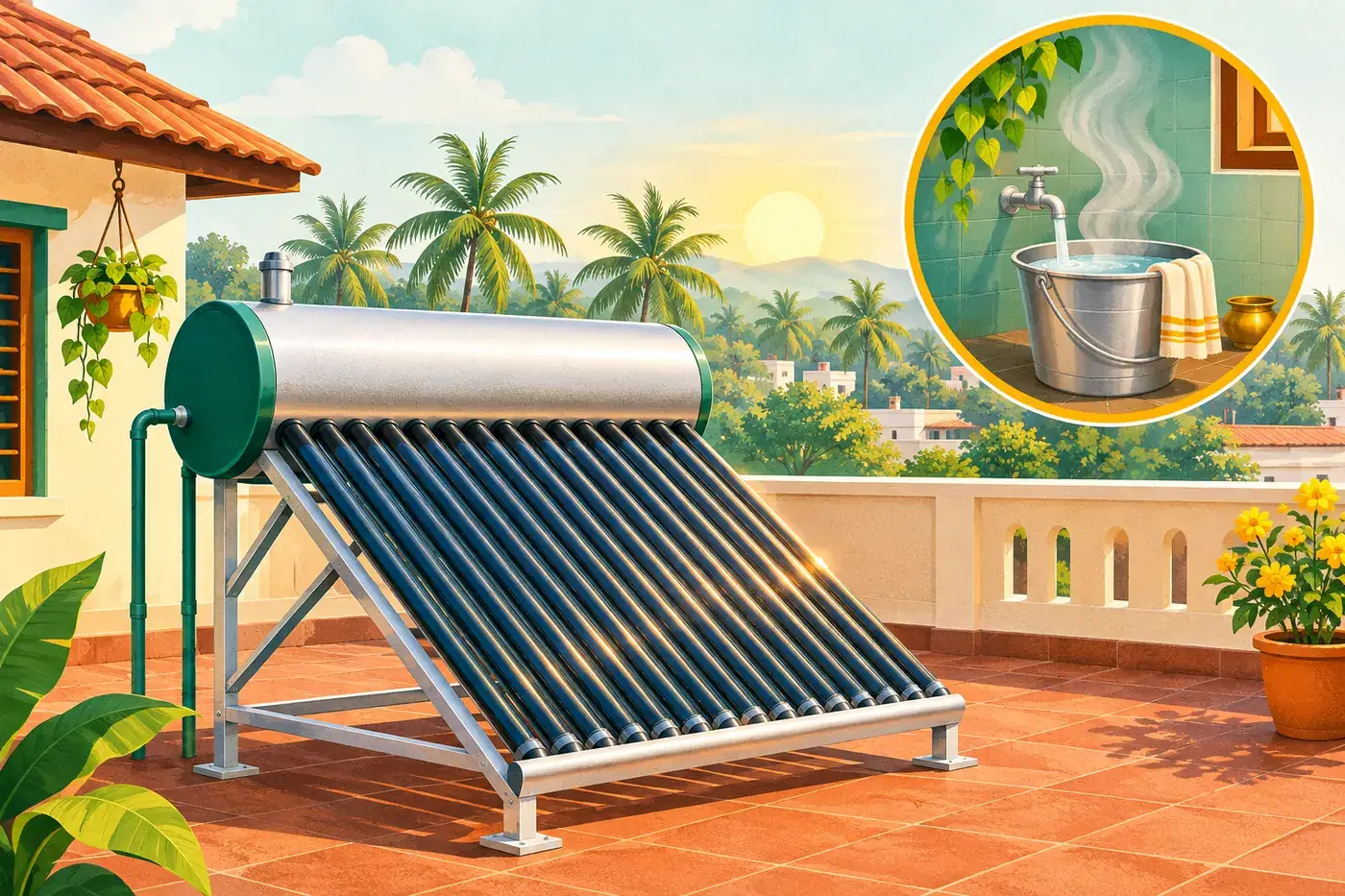
ETC (evacuated tube) heaters use rows of glass vacuum tubes. They're usually the lower-cost option for a house, and they collect heat well in winter. The tubes can break and are replaced one at a time.
FPC (flat plate) heaters use metal collector panels. They cost more and have no glass tubes to break. Many pressurised systems use FPC, but check the pressure rating of the exact model.
If your water is hard
Hard water (ಗಡಸು ನೀರು) leaves white scale wherever it's heated: in tubes, pipes, valves and the tank. A glass-lined tank, like Supreme Solar's glass-lined range, protects the tank from corrosion, but it doesn't stop scale in the tubes.
So test your water's hardness. If it's high, plan for regular descaling (how often depends on the hardness and the system), choose a system with a heat exchanger if the budget allows, or fit a softener on the inlet.
Pressurised or non-pressurised?
If water reaches your bathrooms by gravity from an overhead tank, a non-pressurised heater is simpler and cheaper. If you use a pressure pump, or want strong flow for a shower mixer, you need a pressurised model rated for that pressure. Never put a pump on a heater that isn't built for it.
Roof space, weight and pipes
Allow roughly 4–6 square metres of shade-free roof for a 200 LPD system once you include the stand, pipe route and room to service it. Larger systems need more. A filled tank is heavy, so the slab and anchoring need checking.
As a starting point, the collector should face south with no shade from about 9 am to 4 pm. Keep the hot water pipe to the bathroom short and insulated. The roof, slab, shade and pipe route should all be checked on site before you get a final quote.
Cloudy days and backup
On cloudy days the heater still warms water, just less. For a long monsoon spell, an electric backup element helps. Ask whether the exact model you're buying supports one, what wiring it needs and what it adds to the price.
What it costs
Listed prices before GST. Stand and roof installation are quoted after a site visit.
- V-Guard 100 litre: ₹20,344
- Supreme Solar 165 litre: ₹23,253
- Supreme Solar 200 LPD: ₹27,349
- V-Guard 200 LPD: ₹30,400
- Supreme Solar 300 LPD: ₹35,905
- Supreme glass-lined 400 litre: ₹50,692
Looking after it
Wipe dust off the tubes every few weeks in the dry months. Book a service once a year, or every six months if your water is very hard. Service check-ups start at ₹500; descaling, tubes and valves are charged as needed, and we tell you before starting.