ಬೋರ್ವೆಲ್ ನೀರಿಗೆ ಯಾವ ವಾಟರ್ ಪ್ಯೂರಿಫೈಯರ್ ಬೇಕು?
RO, UV or UF: which water purifier suits your water?
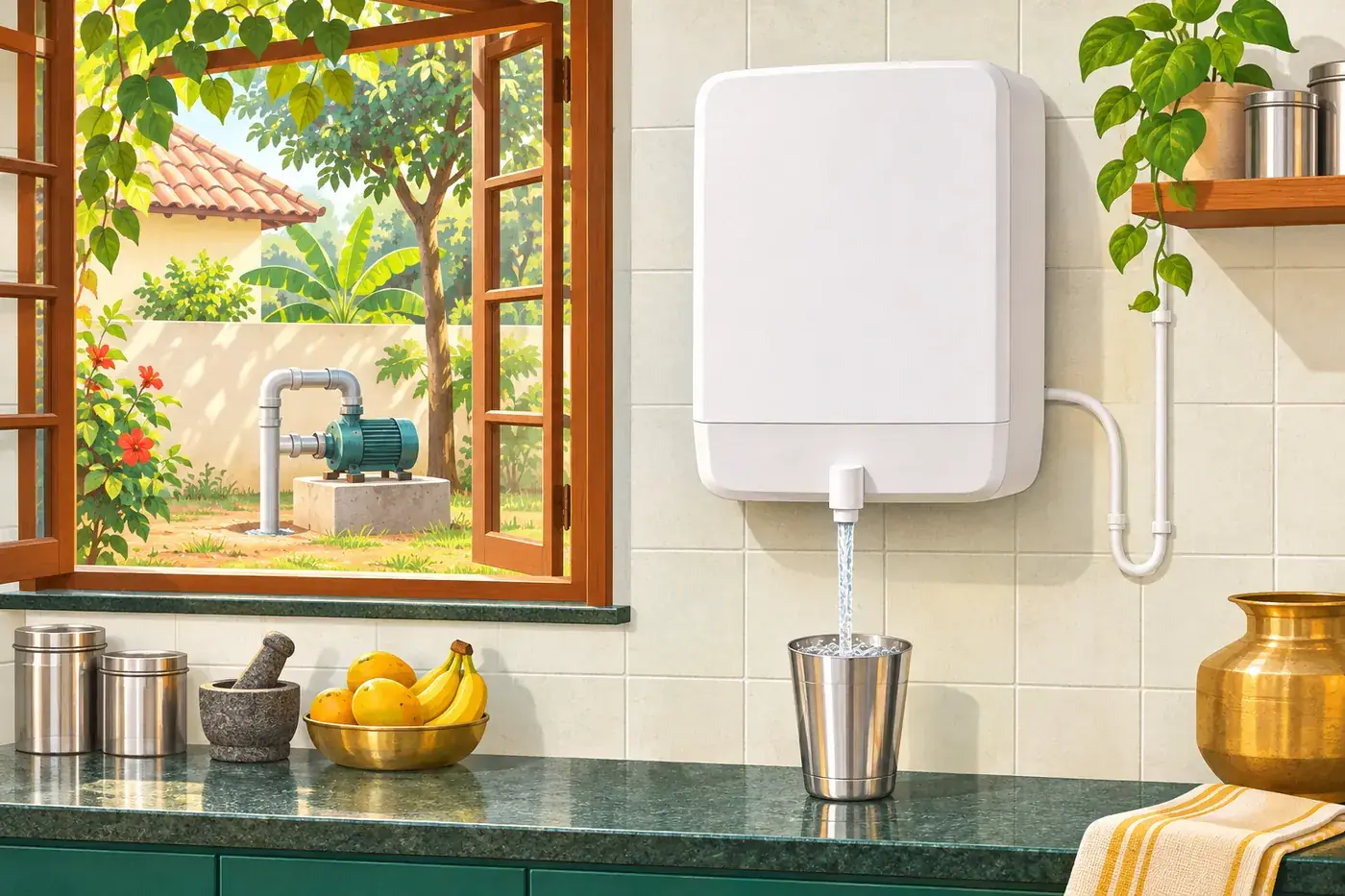
The right purifier depends on what's in your water, and that changes from one street, borewell and season to the next. So test the water first, then choose.
Test the water first
A TDS meter measures the salts and minerals dissolved in water (ನೀರಿನಲ್ಲಿ ಕರಗಿರುವ ಉಪ್ಪು-ಖನಿಜಗಳ ಪ್ರಮಾಣ). It's a useful first check, but it can't see bacteria, fluoride, nitrate or iron. For a borewell, a lab test of the raw water is worth the small cost before you spend on a purifier.
Indian drinking water standard IS 10500 gives 500 mg/L of TDS as the acceptable limit, and 2,000 mg/L as the most that's permitted when there's no other source. When a borewell reads high, it's often from hardness, and that's where an RO purifier usually makes sense. Your lab report decides it.
What each type does
RO (reverse osmosis) pushes water through a very fine membrane. It brings down dissolved salts and hardness and removes many other contaminants, as long as the membrane and pre-filters are in good shape. It's the only one of the three that lowers TDS.
UV kills bacteria and viruses with an ultraviolet lamp, but it needs clear water and electricity and doesn't change TDS. UF strains out particles and most bacteria through a fine membrane and works without power, but it doesn't remove dissolved salts either.
Purifiers for borewell water usually combine stages: sediment and carbon filters, then RO, then UV or UF.
A rough guide, once you know your water
- Municipal water with low TDS and a clean lab report: UV or UF is usually enough
- Borewell water with high TDS or hardness: RO, usually with UV
- Any water with a bad lab result for fluoride, nitrate or bacteria: ask us before choosing, because the fix depends on the problem
Is RO water safe?
RO water is safe to drink when the source, filters, storage tank and service are all looked after. A purifier with an old membrane, a dead UV lamp or a dirty tank isn't. RO does take out some useful minerals too, which is why many models add minerals back or blend in a little water through a TDS controller.
Copper purifiers
Models like Pearl Copper and Aquaguard Active Copper add a copper stage after purification. Some families like the taste, the way they like water from a ತಾಮ್ರದ ಪಾತ್ರೆ (copper pot). Treat it as a preference, not as extra protection: the RO and UV stages do the treatment, and copper is an extra stage after them.
Running costs and service
Pre-filters typically need changing every 6–12 months and the RO membrane every 2–3 years. Hard borewell water can shorten both. Slower flow, a change in taste or a rise in output TDS tells you something is due.
RO sends some water down the drain as reject water. Collect it for mopping, washing vehicles or the garden, and keep it well away from the drinking water tank.
Prices at our shop
Listed prices before GST. We also service and repair purifiers of all brands.
- Aqua Mars RO purifier: ₹9,000
- Pearl Copper RO + UV purifier: ₹11,800
- Aquaguard Active Copper: ₹12,350
- Zero B Pristine: ₹24,000