ಗಡಸು ನೀರು ಏನು ಮಾಡುತ್ತದೆ? ಸಾಫ್ಟ್ನರ್ ಬೇಕಾ?
Hard borewell water: what it does and how a softener fixes it
White marks on buckets and taps, a geyser that rumbles, soap that won't lather: these usually mean hard water, ಗಡಸು ನೀರು. Many borewells in and around Davangere give it, but test yours before you buy anything.
What makes water hard
Hardness comes from calcium and magnesium that water picks up from rock underground. Hardness on its own doesn't tell you whether water is safe to drink; that needs a separate test. What hardness does do is leave white scale wherever the water is heated or dries.
Hardness is measured in mg/L as CaCO₃. Drinking water standard IS 10500 gives 200 mg/L as acceptable and 600 mg/L as the most permitted when there's no other source. A TDS meter can't tell you hardness, so ask for a hardness test.
Possible signs of hard water
- White crust on taps, shower heads, tiles and steel vessels
- Soap and shampoo don't lather well; clothes feel stiff
- The geyser takes longer to heat, or rumbles
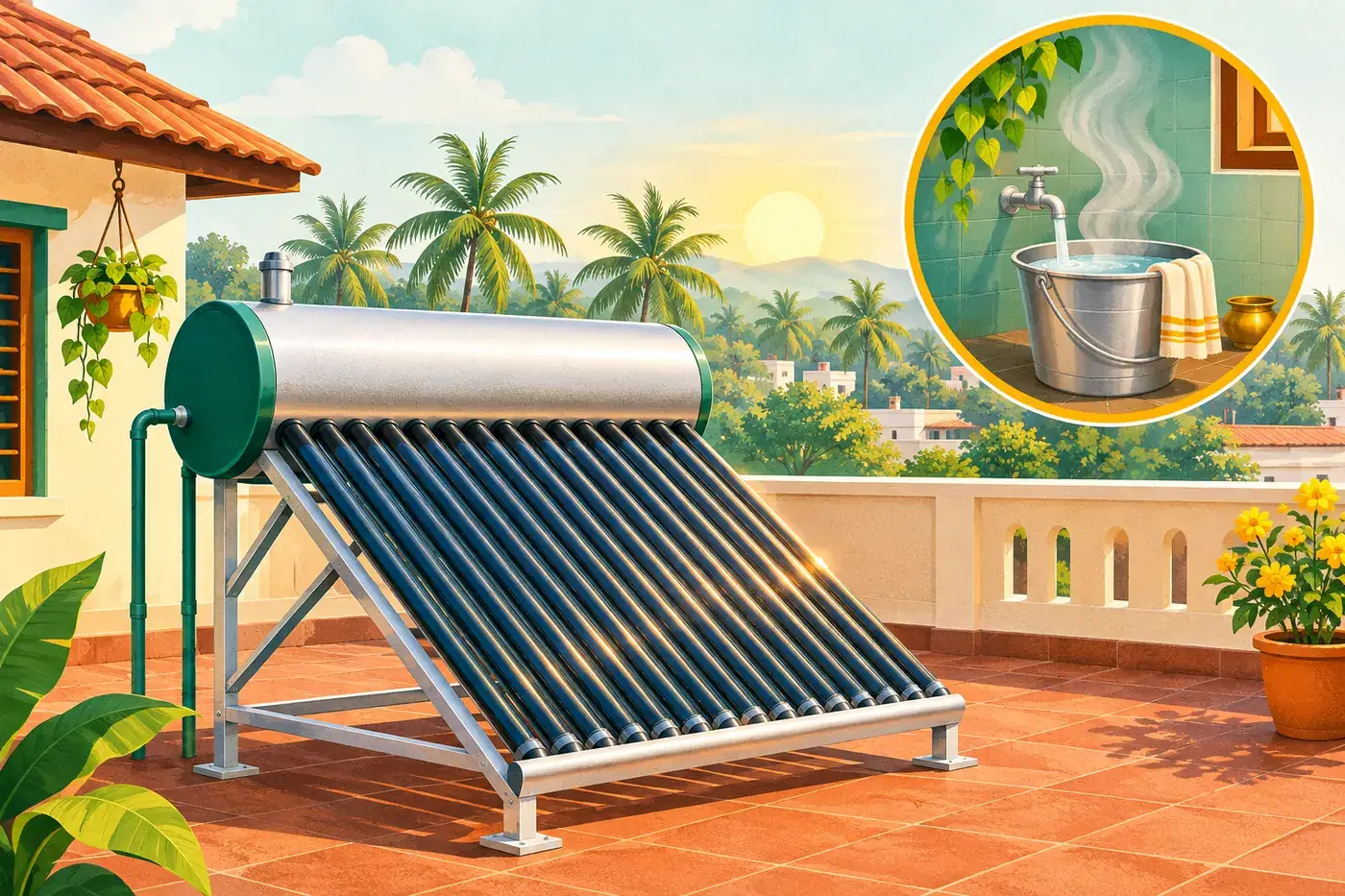
- The solar water heater gives less hot water each year
- Some people notice drier skin and rougher hair
Where scale does damage
Scale on a geyser element makes it work harder and fail sooner. In a solar water heater it builds up in the tubes, pipes and valves and slowly cuts the hot water you get. Washing machines, RO purifiers and bathroom fittings suffer too. Descale existing appliances when you fit a softener so they start clean.
How a softener works
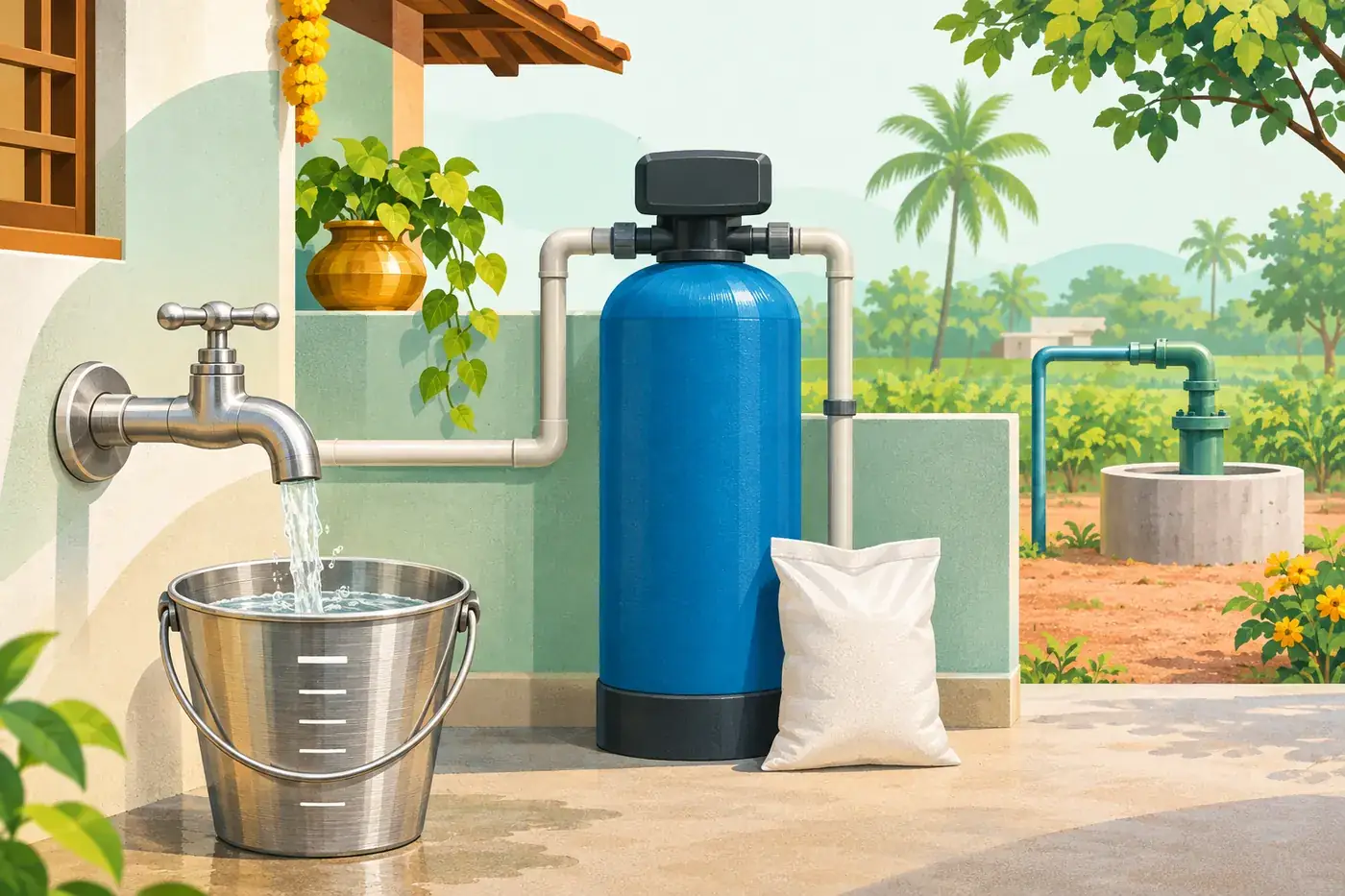
A water softener is a tank of resin beads, usually fitted where water enters the house. As water passes through, the beads swap calcium and magnesium for sodium, and the water comes out soft: ಸಾಫ್ಟ್ ನೀರು (ಮೃದು ನೀರು).
When the beads are full, the softener rinses them with salt water. This is called regeneration. It needs a drain, some water and regular salt. Automatic softeners regenerate on their own; you keep the salt tank filled.
What a softener won't do
A softener removes hardness. It doesn't make water safe to drink, doesn't lower TDS much, and doesn't remove fluoride, nitrate, iron or bacteria. Most homes use softened water for bathing and appliances, and a purifier for drinking water in the kitchen.
What we supply
We supply and install Zero B and Pentair softeners, from home units to automatic softeners for apartments and commercial buildings. On our price list, the Pentair automatic softener is ₹68,000 and the Zero B AS3 is ₹98,000, before GST, and home units cost less. To size one we need your water's hardness, your peak water use, the space available and a drain point.