ಮನೆಯ ಮೇಲೆ ಸೋಲಾರ್ ಹಾಕಿಸುವುದು: ಖರ್ಚು ಮತ್ತು ಸಬ್ಸಿಡಿ
Rooftop solar for Davangere homes: cost, subsidy and what to choose
Rooftop solar (ಸೋಲಾರ್ ಪ್ಯಾನಲ್) does one of two jobs: cutting your electricity bill, or keeping chosen appliances running through power cuts. They need different systems, so decide which you want first.
On-grid, off-grid or hybrid?
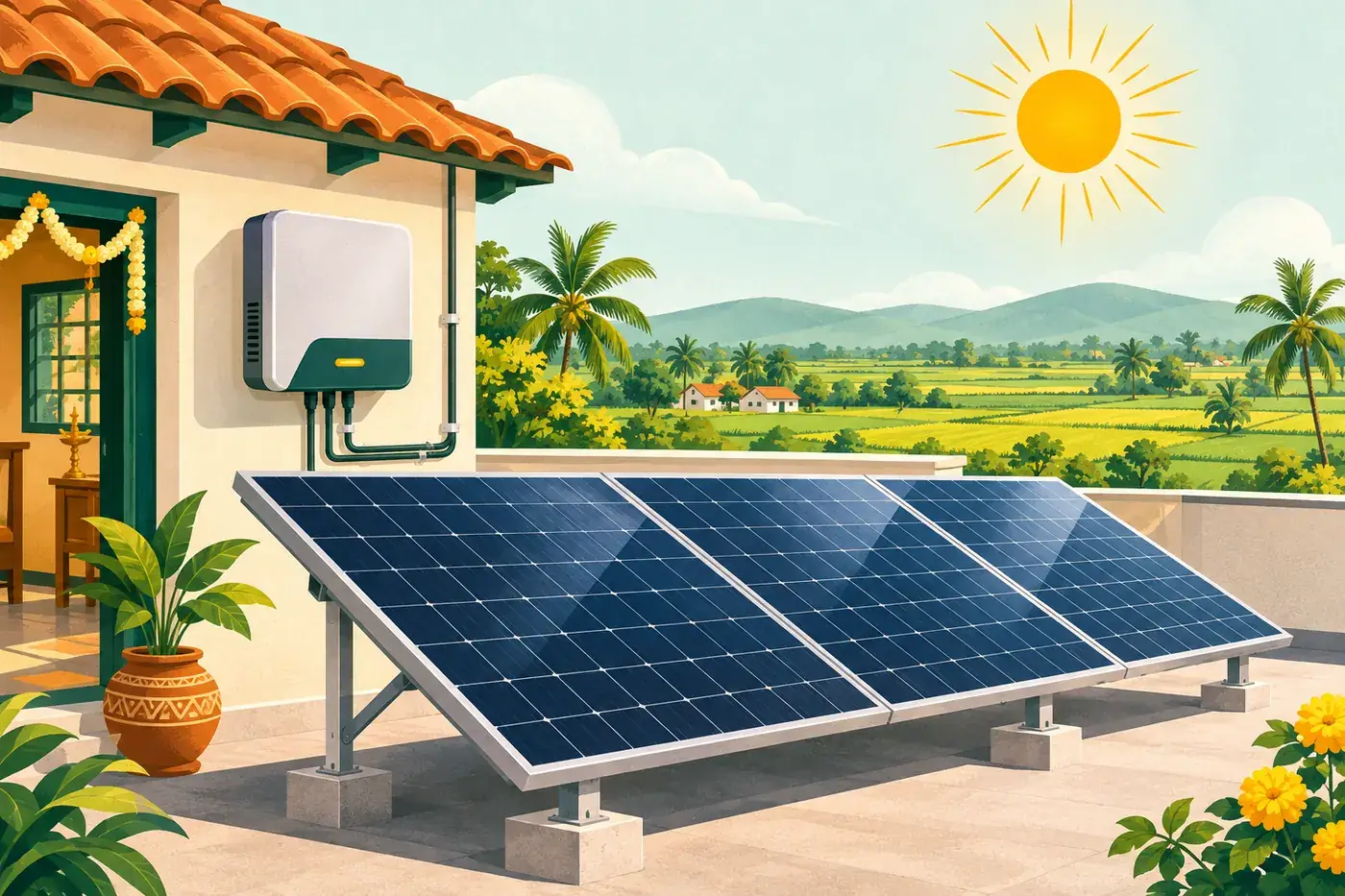
An on-grid system connects to BESCOM's network through a bidirectional meter, and the units you export are settled under BESCOM's current metering rules, after approval. It has no batteries and switches off during a power cut. That's a safety rule, so line workers aren't put at risk.
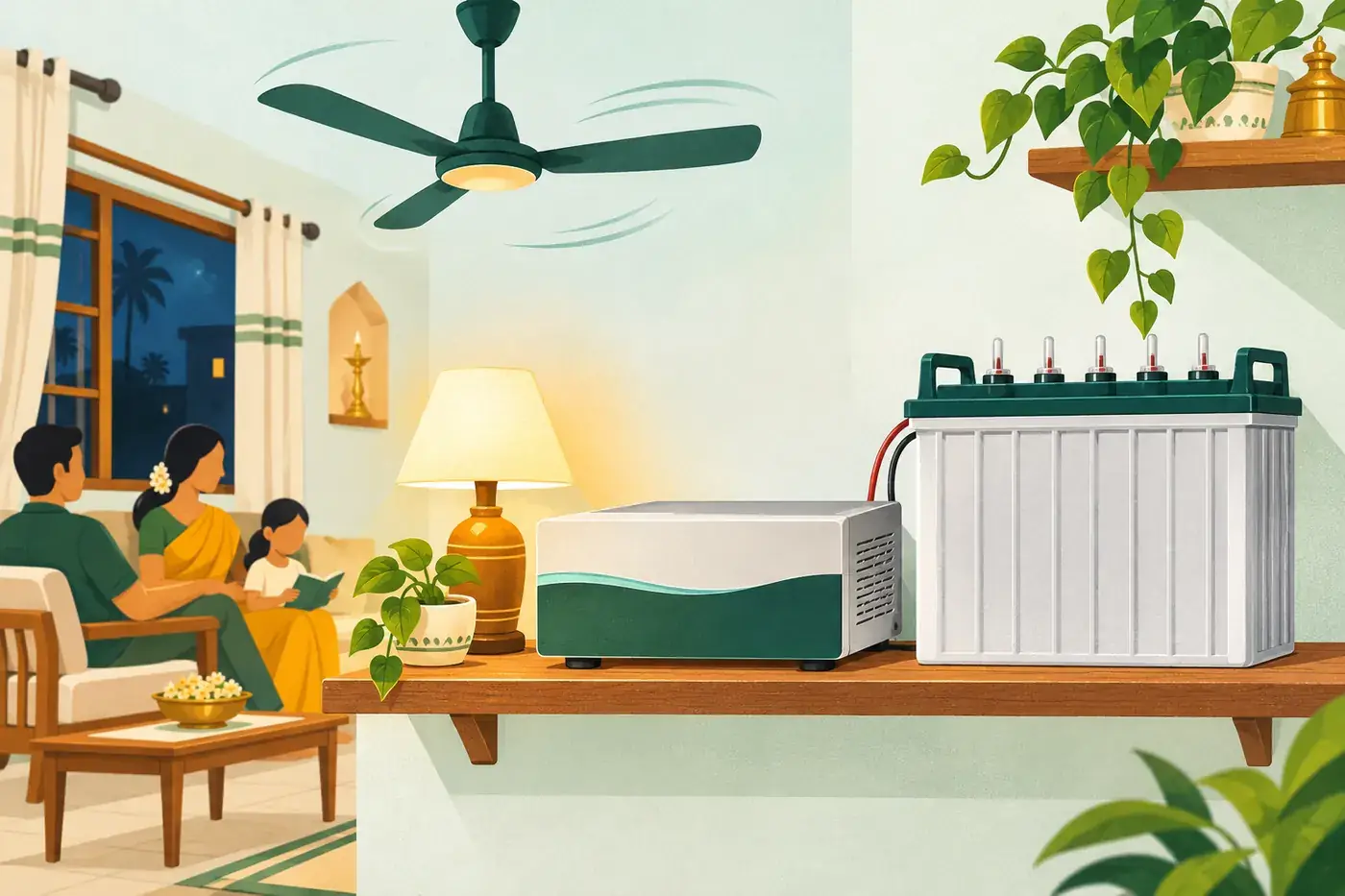
An off-grid system stores power in batteries and runs your selected loads during cuts, with no grid connection. Batteries make it cost more per kW. A hybrid system does both. Choose based on how long your power cuts really are.
How big a system?
Over a year, 1 kW of panels in Karnataka produces roughly 4 units a day on average: more in summer, less in the monsoon, and less with shade or dust. As a first estimate, a home using 120 units a month needs about 1 kW, and 300 units about 2.5 kW.
Allow about 10–12 square metres (110–130 sq ft) of shade-free roof per kW, including space to walk and clean the panels.
The PM Surya Ghar subsidy
Under the central PM Surya Ghar Muft Bijli Yojana, homes installing a grid-connected rooftop system can get ₹30,000 per kW for the first 2 kW and ₹18,000 for the third kW, up to ₹78,000. You apply on the national portal, use a registered vendor and approved equipment, and the subsidy reaches your bank account after installation, net metering and inspection are complete.
Off-grid systems aren't covered, and batteries aren't subsidised; with a hybrid system, only the eligible grid-connected part counts. Rules change, so check the portal before you plan around the subsidy.
What goes into the price
- Panels: compare wattage, efficiency and warranty. Mono PERC is one kind of monocrystalline panel, and newer types like TOPCon are also available. For subsidy jobs, panels must meet the scheme's rules.
- Inverter: on-grid, off-grid or hybrid, sized to your load
- Batteries, for off-grid and hybrid: tubular solar batteries such as Luminous 135 Ah or 150 Ah
- Mounting structure, wiring, earthing, surge and lightning protection
- Meter and approval charges for on-grid systems
Batteries: what they really give you
A 12 V, 150 Ah solar battery stores about 1.8 kWh on paper. Lead-acid batteries last longer when you use only part of that, so plan on well under a kilowatt-hour of usable power per battery each night. Size the battery bank from the loads and hours you need, not from the panel size.
What we supply
We supply solar panels, Luminous solar batteries (₹19,000 for 150 Ah; ₹21,500 for the 135 Ah model with a 72-month warranty) and complete off-grid systems. A bill gives a first estimate. The final size depends on your roof, shade, sanctioned load and, for backup, what you want to run.